If you’re considering teaching lifesaving skills for a living, or adding instructional credentials to your clinical role, the first question is usually about the requirements. The answer is simple. Becoming a BLS CPR Instructor Course in Houston requires holding an active BLS provider certification, meeting the compliance standards of an authorized training center, completing the instructor course, and demonstrating the ability to teach effectively.
What often gets overlooked is that this path is about making sure instructors are ready, responsible, and confident enough to lead.
So, before you invest time or money, let’s clarify what enrollment requires, and what it doesn’t.
Why Instructor Requirements Exist in the First Place
BLS (Basic Life Support) is not a casual skill set. It is a set of essential life saving procedures such as AED or CPR, performed by trained professionals for cardiac arrest or respiratory distress.
According to the CDC, over 350,000 cardiac arrests occur outside hospitals each year in the U.S., and immediate CPR can double or triple survival rates.
Because of that reality, instructor standards aren’t set for formality. They exist for risk management of human life.
Instructor courses focus less on clinical depth and more on teaching accuracy, evaluation consistency, and adherence to protocol.
In Houston, these standards are even more critical. Employers expect instructors to reflect national benchmarks, not personal interpretations.
Core Requirements to Enroll in a BLS CPR Instructor Course in Houston
While minor details vary by training center, enrollment requirements are consistent nationwide. Reputable programs will require the following.
1. An Active BLS Provider Certification
You must hold a current BLS Provider card, typically issued by the American Heart Association.
This certification confirms you can:
- Perform high quality CPR
- Use an AED correctly
- Follow adult, child, and infant resuscitation protocols
Keep in mind: Instructor courses do not re-teach BLS – they teach you how to teach it.
2. Alignment With an Authorized Training Center
Instructor courses are not independent credentials. You must affiliate with an AHA authorized Training Center or Training Site.
In Houston, this affiliation guarantees:
- Access to official curricula
- Valid issuance of student cards
- Compliance with OSHA and employer standards
At CPR Training Clinic, this compliance is incorporated into the enrollment process, removing the confusion or guesswork for candidates.
3. Completion of an Instructor Essentials Course
This is the formal instructor training component.
Here, instructors are evaluated not on how impressive their resumes are, but on how consistently they assess others.
Topics typically include:
- Adult learning theory
- Course structuring and timing
- Skills testing and remediation
- Legal and ethical responsibilities
4. Skills Proficiency and Teaching Demonstration
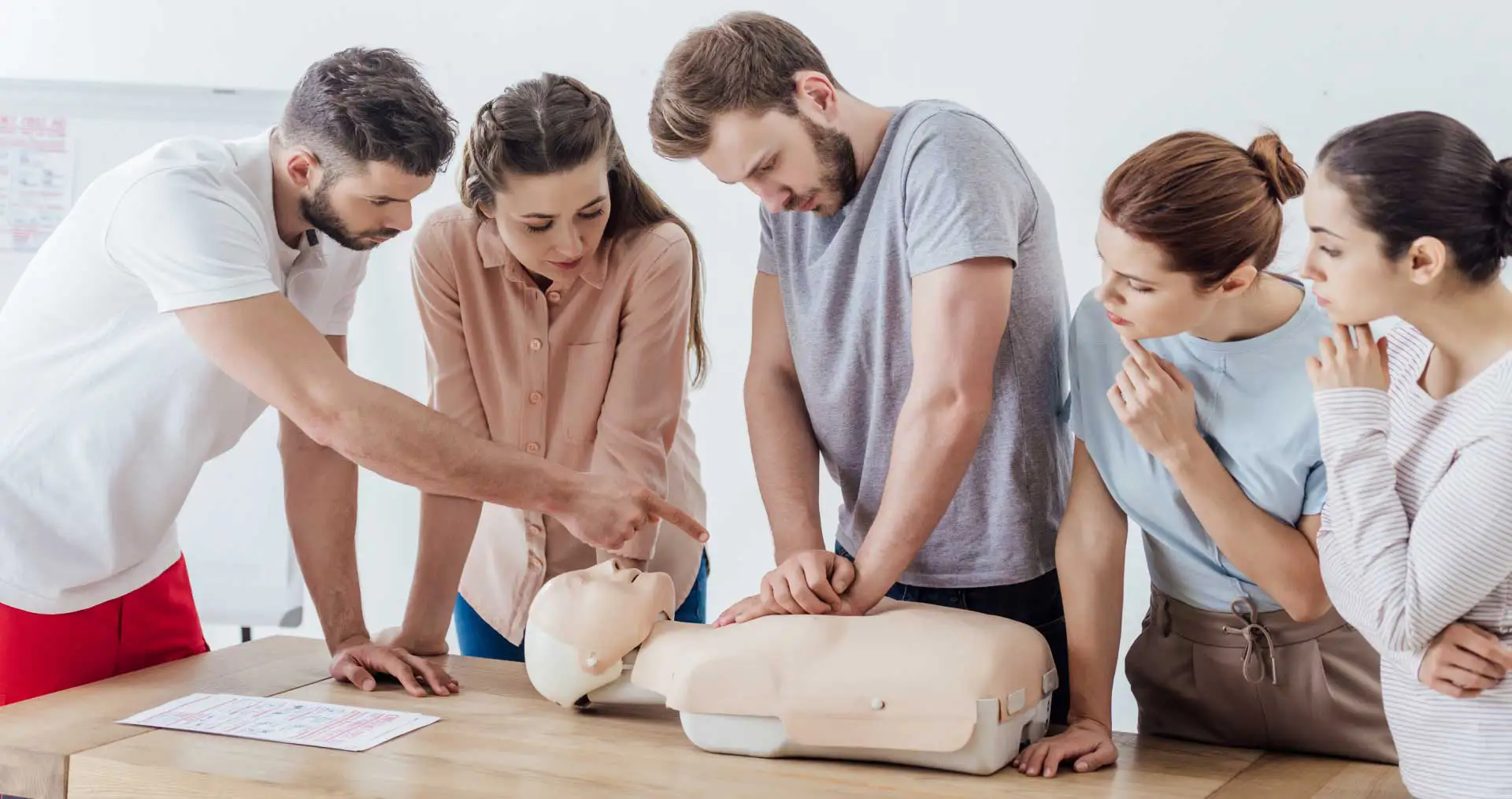
A BLS CPR Instructor Course in Houston requires a monitored teaching session, sometimes called a “monitoring” or “checkout.”
This step exists for one reason:
Knowing CPR does not automatically mean you can teach it well.
In these programs, you will be asked to demonstrate:
- Classroom management
- Clear skill instruction
- Accurate feedback using AHA standards
Note: BLS instructors must stay updated on the evolving emergency care science guidelines provided (like AHA’s 2025 ECC)
Additional Eligibility Factors (Often Overlooked)
Some requirements don’t appear on enrollment pages but matter in practice. Take a look at them below.
Age and Professional Background
- Minimum age is typically 18 years
- A healthcare license is not required
Technology and Compliance Readiness
Modern instructor roles require:
- Comfort with online portals
- Timely documentation
- Secure handling of student records
A Simple Comparison Table: Provider vs. Instructor
| Requirement | BLS Provider | BLS CPR Instructor |
| Perform CPR & AED | Yes | Yes |
| Teach CPR Skills | No | Yes |
| Evaluate Students | No | Yes |
| Issue Course Cards | No | Yes |
| Training Center Affiliation | No | Required |
Houston Specific Considerations
Houston’s healthcare ecosystem creates consistent demand for qualified instructors. However, it also raises expectations.
Local employers often prefer instructors who:
- Understand Texas workforce requirements
- Can train multilingual or diverse populations
- Adapt instruction for clinical and non clinical settings
What Enrollment for BLS CPR Instructor Course in Houston Does Not Require
Let’s clear up common myths:
- You do not need decades of clinical experience
- You do not need to be a paramedic or physician
- You do not need to purchase training equipment upfront
How These Requirements Contribute
From a systems perspective, the requirements balance access and accountability. NIH backed studies show that CPR skills deterioration begins within months without reinforcement. This is where instructor standards slowly decrease across workplaces and communities.
Eventually, we get quality instructors creating consistency; consistency saves time; time saves lives.
That’s not theory but a reality observed across EMS (Emergency Medical Services) systems and hospital networks.
Looking for an Authentic BLS Instructor Certificate Provider?
When credentials matter, CPR professionals avoid shortcuts.
They choose providers with authorized training center standards, proven track record, strict compliance, and recognition that stands up to scrutiny. That’s why CPR Training Clinic is widely regarded as a trusted and reliable BLS Instructor Certificate provider. Our programs are strictly aligned with authorized training center standards.
Who issues your instructor certificate matters as much as earning it.
Your reputation, career mobility, and long term opportunities depend on credentials that employers immediately recognize and respect.
Conclusion
Lastly, to enroll in a BLS CPR Instructor Course in Houston, you need three things: a valid BLS Provider certification, alignment with an authorized training center, and the readiness to teach. That’s it.
The process is not present to test how impressive your resume looks. It confirms that when someone’s life depends on a skill, that skill was taught correctly.
Ready To Take a Step?
If you’re serious about teaching lifesaving skills the right way, this isn’t a decision to delay or second guess. Train with a provider that professionals trust and students respect.
Enroll with a CPR Training Clinic today and secure your authentic BLS Instructor certification in Houston.
FAQs
Do I need a medical license to enroll?
No. Enrollment does not require a medical license.
How long does the instructor course take?
Most programs complete training within one to two days plus monitoring.
Is the certification recognized nationwide?
Yes. AHA aligned instructor credentials are valid across the U.S.