Take a moment to think about your CPR certification – are you trained enough to know exactly what to do in a real emergency?
That small card in your wallet might feel like reassurance. It suggests you’re prepared, trained, and ready to act. But the truth is, not all CPR certifications train you the same way…
This is where many people get it wrong. It’s easy to assume that any certification is enough. But in reality, the level of training you have directly shapes how you respond when every second counts.
So how do you know which level is right for you?
Keep reading as we explain the different types of CPR certification and help you find the one that matches your role and real world responsibilities.
How CPR Certification Levels Define Your Role in an Emergency
Before looking into the specifics, it is important to understand why CPR certification is divided into levels.
To explain it in simple words, emergencies vary in complexity. For instance, the skills needed for a hospital cardiac arrest are far more advanced than those needed in a public scenario. This highlights why CPR training levels exist.
As a result, choosing the correct level makes sure that you are properly prepared without being overwhelmed.
To understand which certification fits your role – let’s know the levels in detail.
1. Basic Life Support Certification (BLS)
What Is BLS?
Basic Life Support (BLS) is the go to CPR certification for healthcare workers and first responders. It teaches you how to perform chest compressions effectively – so blood keeps flowing when someone’s heart stops. Moreover, you learn how to keep the airway open and how to use an AED – a device that can restart a heart safely.
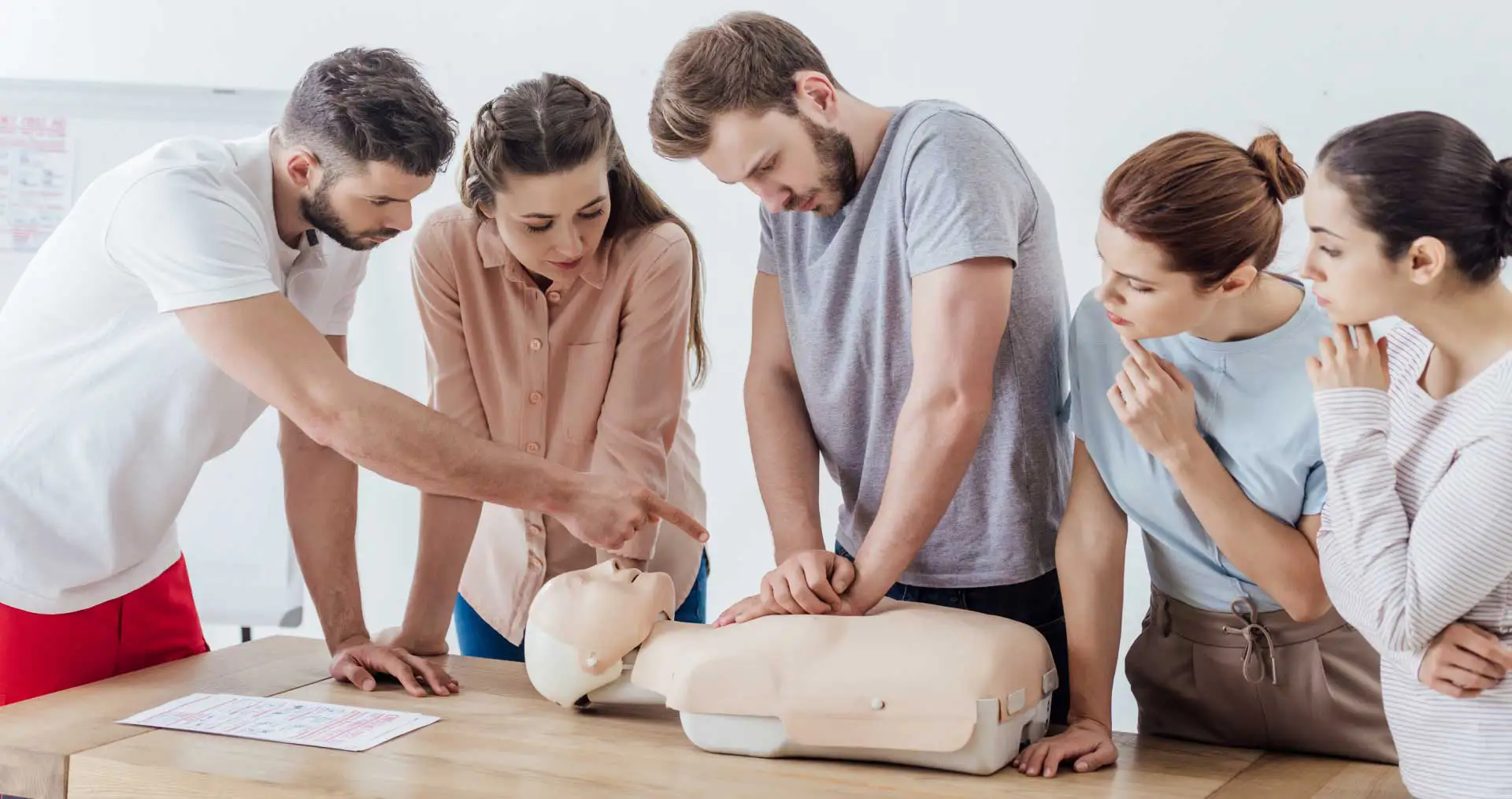
This training is not just theory but a proper hands on training that prepares you to act quickly and confidently when every second counts.
Who Needs BLS Certification?
BLS certification is usually expected for anyone working in healthcare or emergency response. This includes:
- Nurses And Doctors
- Paramedics and EMTs
- Medical And Nursing Students
- Lifeguards And Other Emergency Personnel
In fact, for many of these roles, having BLS certification isn’t just recommended – it’s mostly required by employers before you can start the job.
Key Skills Covered
BLS training covers a range of skills that prepare you for real life emergencies.
You’ll learn how to:
- Work effectively as part of a resuscitation team
- Use a bag mask for ventilation
- Operate an AED in a clinical setting
- Recognize the signs of cardiac arrest or respiratory failure.
Apart from these individual skills – BLS also focuses on coordinating with other responders, which is important when multiple professionals are involved in a critical situation.
BLS and CPR Certification Online
Today, many providers offer CPR certification online for BLS. Conveniently, they offer:
- Interactive modules
- Video demonstrations
- Knowledge assessments
However, most accredited courses still require an in person skills evaluation. This makes sure that participants can perform CPR techniques correctly under supervision.
2. Advanced Cardiovascular Life Support (ACLS)
What Is ACLS?
ACLS – or Advanced Cardiovascular Life Support – is the next step after BLS.
The training is intended for healthcare professionals who handle serious heart emergencies.
This training isn’t just basic CPR. It shows you how to read heart rhythms, make quick decisions in critical moments and use advanced medical treatments to give patients the best survival chances
Who Should Get ACLS Certification?
ACLS certification is made for healthcare professionals who deal with high stakes medical emergencies every day. This includes:
- Physicians
- Critical care nurses
- ER teams
- Anesthesiologists
It also includes anyone whose role puts them on the front lines when a patient’s heart suddenly fails.
Did you know? In many hospitals and intensive care settings, ACLS is a requirement to make sure that the patients receive the fastest and safest care possible.
Key Skills Covered
ACLS training focuses on:
- Advanced airway management
- ECG rhythm interpretation
- Intravenous (IV) medication administration
- Managing stroke and cardiac arrest scenarios
Moreover, ACLS teaches decision making under pressure. Participants learn how to assess situations quickly and apply appropriate treatment algorithms.
3. Lay Responder CPR Certification
What Is Lay Responder Training?
Lay responder training is the easiest and most accessible level of CPR certification.
It’s for anyone without a medical background who wants to feel confident and ready to help in an emergency.
Who Is It For?
This level is ideal for:
- Parents and caregivers
- Teachers and school staff
- Office employees
- Fitness trainers
- General public
In fact, anyone can benefit from this type of training.
Key Skills Covered
Lay responder CPR certification focuses on simplicity and action. Unlike BLS or ACLS, this training avoids complex medical procedures.
It includes:
- Hands only CPR techniques
- Recognizing cardiac arrest
- Using an AED in public settings
- Basic first aid awareness
Differences Between BLS, ACLS and Lay Responder Training
Understanding the distinctions between these levels helps you make an informed decision.
| Feature | Lay Responder | BLS | ACLS |
| Target Audience | General public | Healthcare providers | Advanced medical professionals |
| Complexity | Basic | Intermediate | Advanced |
| Skills | Hands only CPR, AED | Team CPR and airway support | ECG, drugs and advanced care |
| Format | Mostly fully online | Hybrid | Hybrid |
| Purpose | Immediate response | Clinical emergencies | Critical care management |
As you can see, each level builds on the one before it – so the right choice ultimately depends on your specific role and the responsibilities you’re expected to handle.
Which CPR Certification Is Right for You?
Selecting the appropriate CPR certification depends on several factors:
1. Your Profession
If you work in healthcare, BLS or ACLS is likely required. On the other hand, non medical individuals can start with lay responder training.
2. Job Requirements
Many employers specify the type of CPR certification needed. Always check these requirements before enrolling.
3. Learning Preferences
If you need flexibility, CPR certification online is a great option. However, make sure that the course is accredited and includes a practical evaluation, like CPR Training Clinic offers, if necessary.
4. Level of Responsibility
The more responsibility you have in emergency situations, the more advanced your training should be.
The Growing Role of CPR Certification Online
In recent years, online CPR certification has become increasingly popular. This shift is driven by convenience, accessibility and technological advancements.
Online platforms now offer:
- Interactive simulations
- Real life scenario training
- Instant feedback and assessments
As a result, learners are gaining theoretical knowledge through a hybrid learning method that provides the best outcomes.
Conclusion
Summing up, when you know the different levels of CPR certification you make the right choice for selecting the best training option. While lay responder courses focus on immediate action, BLS and ACLS provide progressively advanced skills for professional settings.
Moreover, online CPR certification has made training more accessible than ever. Whether you are a healthcare provider or a concerned individual – there is always a certification option that fits your needs.
Ultimately, only one thing matters: being prepared when it matters most.
Get Certified with Confidence
If you are ready to enroll in your first certification training, we offer flexible, accredited online CPR certification programs personalized to your needs.
So, enroll today and take the first step toward becoming a confident lifesaver.
FAQs
1. What is the difference between BLS and lay responder CPR certification?
BLS is meant for healthcare professionals and goes beyond basic CPR – teaching things like airway management and how to work with a team during emergencies. On the other hand, lay responder training is perfect for bystanders. It focuses on simple, life saving CPR skills and doesn’t require any medical experience.
2. Can I complete CPR certification online without in person training?
Some lay responder courses are fully online. However – BLS and ACLS certifications usually require a hands on skills assessment.
3. How long does CPR certification last?
Most CPR certifications are valid for two years. After that – you need to renew your certification.
4. Is CPR certification online accepted by employers?
Yes, many employers now accept CPR certification online – as long as it comes from an accredited and recognized provider, such as the CPR Training Clinic.